From Felon to Chef
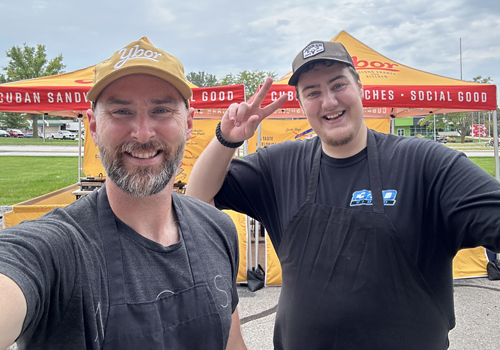
At Bill Radtke’s second-chance kitchen, the language is part of the curriculum. No one is a felon. Everyone is a chef.
The first time anyone called Dave “chef,” he had just led a press through 140 sandwiches at a Lincoln pop up. His 15 years of kitchen experience finally lined up with someone willing to call him by what he could do instead of what he had done.
The next day, Dave found Radtke and told him the moment had changed his life. Radtke asked why.
It was because Kevin Shinn, head chef and owner of Bread & Cup and Portico, kept calling him chef while he ran the press. Dave spent 10 years incarcerated and the label “felon” followed him through every job application, every housing form, and every background check. No one had ever called him chef before. That moment changed his life.
That story sits at the heart of Ybor, the Lincoln-based social enterprise founded by Radtke to support workforce development and coaching for people coming out of incarceration. The kitchen is named after Ybor City, a historic neighborhood in Tampa, Florida, and the birthplace of the Cuban sandwich: a layered creation built from ingredients Cubans, Spaniards, and others brought with them when they arrived. For Radtke, it’s not just menu lore.
“It’s people from different backgrounds coming together to create something meaningful and valuable,” Radtke said. “That story mirrors what we’re building at Ybor.”
Inside the kitchen, the language is intentional.
“In our kitchen, we use different language intentionally,” Radtke explained. “Everyone is called chef. It is not casual. It is a way of reinforcing identity based on skill, contribution, and potential. It changes how someone carries themselves, how they engage in work, and what they believe is possible for their future.”
Radtke holds a bachelor’s degree in mathematics and secondary education and an MBA in nonprofit management. These two backgrounds, structured learning and sustainable business, show up in everything Ybor does. The organization is both a workforce development program and a working restaurant with its first permanent location set to open in Lincoln in late summer of 2026.
The need, he says, is local and critical.
“Nebraska has one of the most overcrowded prison systems in the country,” said Radtke. “With multiple Nebraska Department of Correctional Services facilities located in Lincoln, and with our nonprofit already focused on workforce development, it became clear this was an area where we could build something meaningful and needed.”
The culinary industry, he has found, is more open than most people expect. Restaurants are short-staffed and many chefs care about developing people. What’s often missing is a way for an employer to actually see a candidate before deciding whether to take a chance.
Ybor’s program is built around food safety certification, a four-week culinary class with SCC, 50 hours of pre-apprenticeship at pop-ups, and a 12-month apprenticeship with restaurant partners. It is also designed to make that introduction.
“Employers worry about consistency, workplace behavior, and the potential liability of hiring someone with a record,” Radtke said. “Many simply do not have a framework for evaluating candidates beyond that label. Ybor bridges that gap by functioning as a training and vetting partner. By the time someone enters an apprenticeship, we have seen them in multiple environments, including the classroom, controlled kitchen, and live service.”
Radtke is quick to say no single program solves recidivism. Ybor is a network that includes businesses willing to hire, nonprofits willing to partner, and community members willing to meet someone new.
“The invitation is simple. Come have a sandwich. Talk to our staff. Meet someone whose life experience may be very different from your own,” he said. “The goal is not just to serve food, but to create moments where perspective shifts.”
Jennifer Snyder
Communications Specialist
402-323-3393
jsnyder@southeast.edu