Opportunity Meets Purpose
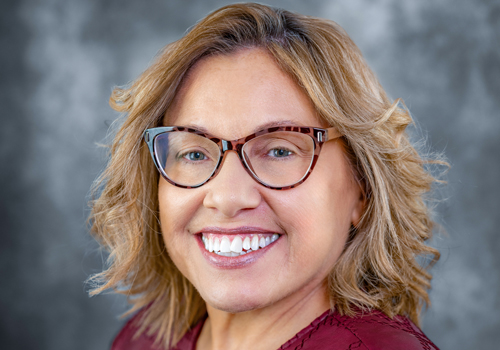
To Dawn-Renee Smith, rehabilitation is a promise. As the force behind the groundbreaking partnership between the Nebraska Department of Correctional Services and Southeast Community College, she helps incarcerated individuals imagine a future worth working toward. Where others see an ending, she sees a beginning.
“Our approach is centered on building the internal and external conditions that support long-term success,” said Smith, NDCS deputy director of rehabilitative services. “Education plays a critical role.”
When the federal government reinstated Pell Grant eligibility for incarcerated students in July 2023, it cracked open a door that had been shut for nearly three decades. Working alongside SCC, Smith helped bring an accredited college education into five southeast Nebraska correctional facilities.
Getting there wasn’t simple. Bringing an outside educational institution into a secure correctional environment meant navigating a maze of protocols and institutional culture. Smith was in the middle of all of it as a problem-solver committed to keeping everyone at the table.
“We had to work through issues like device control, network limitations, and ensuring faculty could operate effectively within a correctional setting,” she said. “Security, IT, facility leadership, and SCC all stayed at the table and focused on solutions rather than barriers. We built processes that protect security while still allowing the program to function as intended.”
That kind of collaborative trust between a state corrections agency and a community college doesn’t happen by accident. It’s the result of people on both sides choosing partnership over convenience, and believing the outcome is worth the effort.
“It is not just about earning a credential, it is about helping people see themselves differently and build a future they believe is worth working toward,” said Smith. “The SCC partnership moves education from something abstract to something directly tied to employment, stability, and purpose after release. That connection between learning and opportunity is what makes it impactful.”
Nebraska formalized that commitment in February 2024, becoming the fourth state to join the national Reentry 2030 initiative. TRANSFORM Nebraska, the broader framework guiding NDCS’s rehabilitation efforts, treats the SCC partnership not as an add-on but as a cornerstone.
When students cross the finish line by earning a degree inside a correctional facility, it sends a message that echoes far beyond the classroom.
“Earning a degree in a correctional setting is not easy,” said Smith. “As an employer, you are overlooking a group of people who have demonstrated commitment, resilience, and the ability to follow through on something challenging. Those are qualities most employers are looking for.”
Jennifer Snyder
Communications Specialist
402-323-3393
jsnyder@southeast.edu