Occupational Therapy Assistant
Your Independence, Our Mission
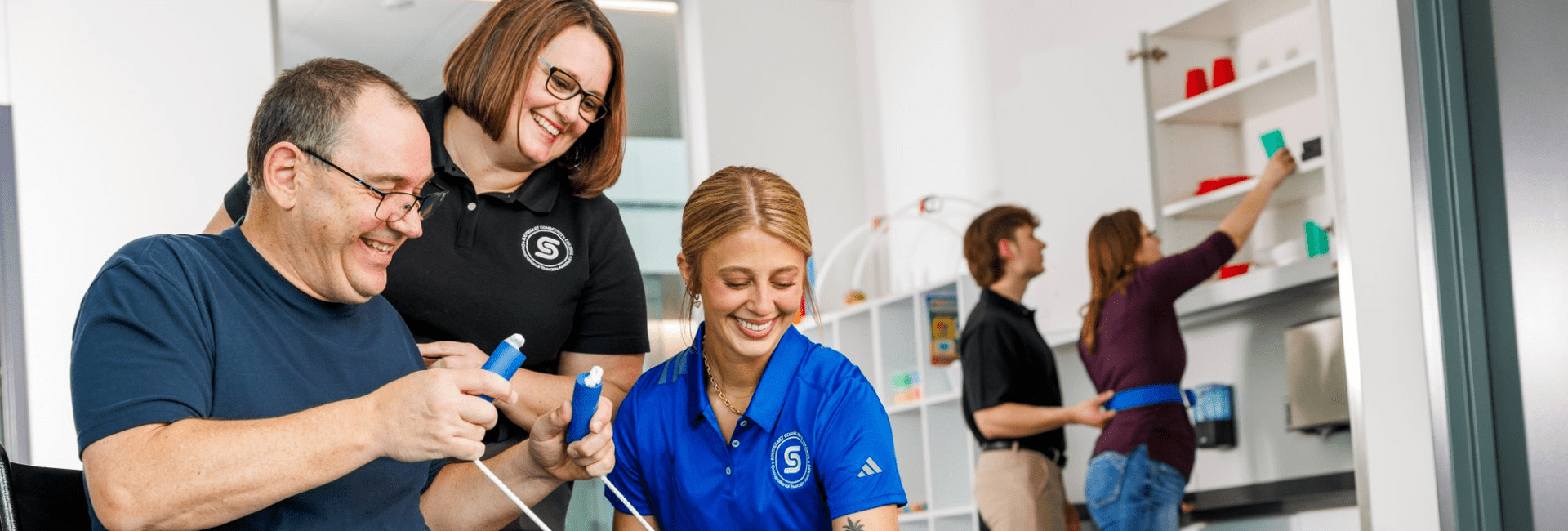
Our Occupational Therapy Assistant program gives you the hands-on training and clinical skills needed to launch a rewarding career in healthcare. Through a balanced blend of classroom learning, skills labs, simulation, and real-world fieldwork, you’ll gain the experience employers are looking for. Our program emphasizes inclusive, student-centered learning; evidence-based practice; and real-world application to meet the needs of individuals and communities. You will graduate with the skills and confidence to have a meaningful impact in the lives of others.
HIGHLIGHTS
Practice with Professionalism & Ethics
Demonstrate professional conduct, communicate effectively, and follow ethical standards while providing safe, client-centered occupational therapy services.
Apply Strong Clinical Reasoning
Use evidence-based decision-making and sound clinical judgment to assess, plan, and carry out effective occupation-based interventions.
Build Real-World, Hands-On Skills
Perform practical skills—including activity analysis, adaptive techniques, and assistive technology—to support clients across a variety of settings and populations.
Occupational Therapy Assistant
Catalog: A.A.S.
Locations: Lincoln
You'll learn how people engage in everyday activities and what supports or limits their ability to participate. From day one, you'll be actively involved in hands-on learning—building skills in activity analysis, therapeutic techniques, and occupation-based interventions. You'll strengthen your clinical reasoning and develop practical skills that prepare you to help clients live fuller, more independent, and meaningful lives.
CREDIT HOURS
65
PROGRAM LENGTH
4 Terms
SCHEDULE
Full-Time
STARTING TERM
Spring
WHY SCC?
What does an Occupational Therapy Assistant do?
Occupational therapy assistants help people of all ages participate in the activities that matter most to them. Working under the supervision of an occupational therapist, OTAs teach functional skills, adapt activities and environments, and use therapeutic techniques to support independence, recovery, and overall well-being.
What facilities are available to OTA students at SCC?
You will learn on the latest equipment and technology in SCC's cutting-edge Health Sciences Building. This modern facility provides realistic, simulated clinical environments where you can practice hands-on skills and build confidence for real-world practice.
Are there opportunities for professional networking in the OTA program?
Students are encouraged to join state and national Occupational Therapy Associations, providing access to professional resources and networking events. You will also have opportunities to connect with occupational therapy practitioners during the state conference, guest learning experiences, and fieldwork rotations.
What skills do I need to succeed as an Occupational Therapy Assistant?
Successful OTAs are compassionate problem-solvers who enjoy helping others. Key skills include strong communication, critical thinking, and creativity in adapting activities to meet client needs. OTAs thrive when they can work well with diverse clients and healthcare teams, stay organized, demonstrate patience, and commit to lifelong learning as they support people in reaching their goals.
CAREER OUTCOMES
Hospital-Based Occupational Therapy Assistant
Hospital OTAs help patients recover from illness, injury, or surgery by rebuilding essential daily skills such as dressing, bathing, and safe mobility. They work with adults, older adults, and children experiencing medical, neurological, or orthopedic conditions. OTAs also support mental health by promoting coping strategies, routines, and meaningful activity throughout recovery.
Outpatient Occupational Therapy Assistant
Outpatient OTAs work with clients of all ages who need focused therapy to improve movement, strength, coordination, and everyday function. They help individuals manage chronic conditions, recover from injury, or develop fine motor, sensory, or cognitive skills. Many outpatient settings also include a mental health component, supporting clients in managing stress and returning to work, school, or daily activities.
School-Based Occupational Therapy Assistant
School-based OTAs support children and adolescents with developmental, physical, sensory, or emotional needs so they can participate and succeed in school. They help students build skills for handwriting, classroom participation, social interaction, self-regulation, and daily routines. OTAs also collaborate with teachers and families to promote both academic success and mental health.
Clinicals
In what term do students start clinicals?
End of the Summer Semester (2nd semester in the program)
How many clinical hours do students complete in the program?
2 level I fieldwork rotations (135 hours combined) and 2 level II fieldwork rotations (16 weeks total) for 540 hours.
In general, what time of day and days of the week can students expect to attend clinical?
Students attend clinicals full-time, typically Monday-Friday, from approximately 8:00 am-5:00 pm., dependent on the site and clinical instructor’s schedules. Some clinicals may offer later afternoon or evening hours, and students should be prepared to adjust accordingly.
Will the program help students secure their sites? Do students need to contact clinical sites prior to acceptance/placement?
The Fieldwork Coordinator arranges all clinical placements based on required hours, practice areas, rotation needs and site availability. Students should not contact potential clinical sites on their own; all placement coordination must occur through the Fieldwork Coordinator.
Where do students participate in clinicals?
All OTA students will complete clinical experiences in at least one pediatric site and one adult site. Additionally, other various sites include, outpatient clinics, skilled nursing facilities, home health agencies, acute care/hospital, pediatric practices. This variety ensures students gain well-rounded experience across the lifespan and diverse practice environments.
Occupational Therapy Assistant Program Accreditation
The associate-degree-level occupational therapy assistant program has applied for accreditation and has been granted Candidacy Status by the Accreditation Council for Occupational Therapy Education (ACOTE) of the American Occupational Therapy Association (AOTA), located at 7501 Wisconsin Avenue, Suite 510E, Bethesda, MD 20814. ACOTE’s telephone number c/o AOTA is (301) 652-AOTA and its web address is www.acoteonline.org. The program must have a preaccreditation review, complete an on-site evaluation, and be granted Accreditation Status before its graduates will be eligible to sit for the national certification examination for the occupational therapy assistant administered by the National Board for Certification in Occupational Therapy (NBCOT). After successful completion of this exam, the individual will be a Certified Occupational Therapy Assistant (COTA). In addition, all states require licensure to practice; however, state licenses are usually based on the results of the NBCOT Certification Examination. A felony conviction may affect a graduate’s ability to sit for the NBCOT certification examination or attain state licensure.
Additional Program Requirements
A.A.S. Getting Started
Applying to an SCC health science program involves two steps. First, students take required courses to prepare for their health science career. Second, once these courses are completed, they can apply to the program of their choice.
To graduate from the Occupational Therapy Assistant Program, students must:
- Complete all required OTA program credit hours as listed in the catalog. Successfully complete all OTA program coursework, with a minimum grade of C+, as listed in the catalog.
- Successfully complete all Level I and Level II fieldwork requirements.
- Students must complete 16 weeks of Level II fieldwork within 4 months and prior to graduation following the completion of the didactic portion of the program.
- Meet all Southeast Community College graduation requirements per the catalog.
State Licensure or Certification Requirements
All SCC students who successfully graduate from this program once accredited may sit for the National Board for Certification (NBCOT) Occupational Therapy Assistant Exam. If the student passes the NBCOT, the student may apply to be licensed in any of the 50 states, the District of Columbia, Puerto Rico, and the U.S. Virgin Islands. Other state requirements, such as finger prints, criminal background checks, etc., may apply.
Program Outcomes and Data
The program anticipates its first cohort of graduates in 2028. Information on enrollment,
graduation and the NBCOT pass rate will be added once available in 2028-29.
View Outcomes and Data
National Board for Certification in Occupational Therapy (NBCOT®) Program Data Results
Complaints
Complaints regarding the program or the program graduates should be addressed to the OTA Program Director, Shannon Trippier. Unresolved complaints about the Program Director or the program itself should be directed to Jill Sand, Dean of Health Sciences at 800-642-4075, ext. 2729 or email: jsand@southeast.edu. All complaints will be documented, including the projected outcome, and kept on file at the program facility. Complaints regarding Accreditation of this program should be addressed to ACOTE.